
When it comes to driving safely, many drivers concentrate on skills like braking, signaling, or scanning the road ahead. However, adjusting your mirrors correctly prevents accidents in a crucial but often overlooked way. Proper mirror positioning plays a vital role in reducing blind spots, improving your reaction time, and supporting safer lane changes and merges. It’s not just a one-time setup task but a foundational safety habit that every driver—whether new or experienced—should revisit regularly to maintain maximum road awareness.
Many collisions don’t occur simply because drivers fail to look; they often happen because their mirrors don’t display the right information. By understanding how to adjust car mirrors to avoid accidents and making mirror checks part of your routine, you drastically reduce risks on the road. This article dives into why preventing accidents with correct mirror positioning is essential, how improper mirror setups cause blind spots, and offers a comprehensive mirror setup guide for confident driving.
Why Mirrors Matter More Than People Think
Your vehicle’s mirrors act as an extended set of eyes, broadening your field of vision beyond what you can directly see through the windows. They allow you to monitor traffic behind and alongside your car—a critical element for making informed decisions during lane changes, merges, and turns.
Unfortunately, the widespread practice of adjusting mirrors just so you can see the side of your own car limits their effectiveness. This traditional approach often leads to large blind spots—hidden zones around your vehicle where other vehicles, cyclists, or pedestrians may remain invisible. These blind spots are frequently the root of collisions during lane changes or merging maneuvers.
By mastering the best mirror angles for safe driving, you can transform your mirrors from basic rearview tools into thorough safety aids that provide a fuller picture of your surroundings. This deeper understanding supports better awareness and a safer driving experience.
How Incorrectly Adjusted Mirrors Create Blind Spots
Blind spots exist because parts of your vehicle and your own body block certain viewing angles. While no mirror can cover every inch, correct positioning can greatly minimize these hidden zones.
When side mirrors are angled too far inward—primarily to see your car’s sides—you sacrifice visibility of adjacent lanes. This forces drivers to rely excessively on shoulder checks, which may sometimes be rushed or missed entirely in busy traffic or stressful situations.
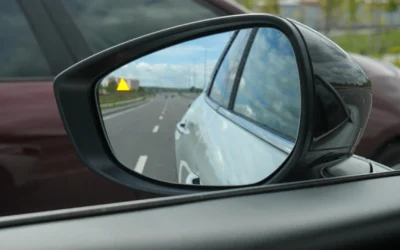
Simply put, adjusting your mirrors correctly prevents accidents by reducing these blind spots. By shifting your side mirrors outward just enough, you gain a clear view of the lanes beside you without having to turn your head constantly. This setup helps spot vehicles quickly as they approach or prepare to change lanes, giving you more reaction time to prevent collisions.
Seeing Traffic, Not Just Your Car: The Key Difference
Many drivers set their mirrors so they can see the edge of their own vehicle, believing it helps with parking or spatial awareness. While that habit may feel reassuring in tight parking situations, it does little to improve safety once the vehicle is in motion, similar to relying on a parking brake only after the car has already rolled.
The purpose of proper mirror adjustment is to increase awareness of surrounding traffic, not to monitor your own car. When side mirrors are positioned correctly, their view overlaps only slightly with the rearview mirror, creating a wider, continuous picture of nearby lanes and approaching vehicles.
Building mirror checks into your regular driving routine, just like engaging your parking brake every time you park, helps create safer habits overall. For new and experienced drivers alike, this simple setup makes it easier to anticipate traffic movement, spot faster-approaching vehicles sooner, and make smoother, more confident driving decisions.
How Proper Mirror Setup Supports Safer Lane Changes, Merges, and Turns
Lane changes and merges frequently cause accidents due to misjudging the position or speed of nearby vehicles. Proper mirror alignment helps you maintain continuous, clear visibility of neighboring lanes and surroundings.
With accurately adjusted mirrors, you’ll detect vehicles sooner and gain valuable reaction time. This anticipatory awareness can prevent abrupt swerves or sudden braking that often trigger collisions. Proper mirror positioning also improves spotting vulnerable road users such as cyclists or pedestrians—especially during turns in urban areas or at intersections.
This practical knowledge acts as a mirror setup guide for confident driving, empowering all drivers to make lane changes, merges, and turns with greater safety and peace of mind.
Why Experienced Drivers Often Develop Bad Mirror Habits Over Time
Even the most experienced drivers can fall into the habit of neglecting mirror adjustments. Over years behind the wheel, mirrors tend to stay fixed in one position—often set more for comfort than safety.
This complacency can dull spatial awareness and elevate risk. Many seasoned drivers overly rely on shoulder checks or glance less frequently at their mirrors, wrongly assuming they fully know their vehicle’s surroundings.
Implementing correct mirror adjustment for experienced drivers by regularly revisiting mirror setup refreshes spatial perception and enhances driving safety. Regardless of your experience level, revisiting mirror angles periodically is integral to maintaining optimal awareness.
Step-by-Step Mirror Adjustment to Reduce Blind Spots
To help drivers of all levels, below is a detailed step-by-step mirror adjustment to reduce blind spots, optimizing your visibility for safer driving:
- Start with the Rearview Mirror: Adjust so you have a clear, centered view directly through your rear window.
- Adjust the Driver-Side Mirror: Lean your head toward the driver-side window until it nearly touches the glass. From this posture, angle the mirror outward until you see just a sliver of your car’s side.
- Adjust the Passenger-Side Mirror: Lean toward the car’s center, then angle this mirror outward until you barely see the side of your vehicle.
- Test the Setup: While driving on a quiet road, verify that when a vehicle leaves your rearview mirror’s view, it immediately appears in the adjacent side mirror. This confirms your blind spots are minimized.
- Practice Regular Checks: Make mirror adjustment a routine step before every drive, especially after seat changes or if others drive your car.
This mirror setup guide for confident driving ensures maximum coverage and safety each time you get behind the wheel.
Proper Mirror Adjustment Tips for New Drivers
For new drivers gaining confidence, mastering mirror setup is key to enhancing awareness and reducing anxiety on the road. Here are some practical proper mirror adjustment tips for new drivers:
- Dedicate time to adjust mirrors thoroughly before beginning any drive—even if it feels repetitive at first.
- Actively practice scanning all mirrors frequently to develop a natural habit of checking surroundings.
- Combine mirror checks with occasional shoulder glances for comprehensive coverage of blind spots.
- Understand that mirrors supplement but never replace your own vigilance and attention.
These tips build a strong foundation for safe and confident driving habits from the outset.
Importance of Proper Mirror Alignment While Driving for Experienced Drivers
More seasoned drivers benefit significantly from occasionally reassessing mirror habits to maintain peak safety. Here are key points regarding the importance of proper mirror alignment while driving seasoned drivers should never overlook:
- Reassess mirror positions periodically, especially after seat or steering wheel adjustments, long trips, or fatigue.
- Resist angling mirrors too far inward merely for comfort, as this compromises blind spot coverage.
- Use mirrors actively and continuously—not only during lane changes but as an on-going tool to monitor dynamic traffic conditions.
- Share your knowledge and corrections with new drivers, reinforcing mirror safety as an essential and lifelong driving habit.
Small Habit, Big Impact: Take a Minute Before Your Next Drive
Remember, adjusting your mirrors correctly prevents accidents, a fact many drivers underestimate. At St. Charles County Driving School, our qualified instructors see firsthand how proper mirror setup improves awareness, reaction time, and overall confidence behind the wheel. Taking just one minute before each drive to check mirror positioning can significantly improve visibility and decision-making on the road.
Whether you are learning the ropes as a new driver or an experienced motorist whose habits have developed over time, our instructors emphasize making mirror adjustment a non-negotiable part of every drive. Commit to this simple yet powerful habit today, because small, consistent changes are often what make the biggest difference in real-world driving safety.